Brazilian researcher João Botelho has, for the second time, experimentally reversed a bird trait to a dinosaur-like state by inhibiting a maturation gene in chicken embryos, causing the fibula to develop as a tube reaching the ankle. Published in the journal Evolution, the study provides insight into the genetic mechanisms behind the dinosaur-to-bird transition.
A new report led by the Middlebury Institute warns that advances in 3D printing and AI could enable state and non-state actors to covertly manufacture weapons of mass destruction. The authors highlight three distinct risk pathways, including accelerated production for existing programs and the potential for unforeseen threats. They urge policymakers to pay closer attention to this emerging security challenge.
A University of Cambridge spin-out, Paragraf, says it has begun producing graphene wafers at commercial scale, a milestone that could finally move the material from labs to real-world devices. The company expects its first graphene-based electronic product to launch within months, potentially transforming industries from electronics to healthcare.
MIT researchers have achieved superconductivity in pristine graphene by stacking two layers at a 1.1-degree twist and applying an electric field. This marks the first time the phenomenon has been observed without chemical doping, opening possibilities for room-temperature superconductors.
SpaceX has introduced Starshield, a satellite service tailored for government and military use, leveraging its Starlink network. The program aims to support national security missions with secure payload hosting and inter-satellite laser communications. This move solidifies SpaceX's role in the defense sector, raising questions about space militarization.
Ukrainian officials report Russian forces withdrew from Chernobyl after showing symptoms of radiation sickness, raising concerns about nuclear safety amid the conflict. The IAEA plans to send a mission, while experts question the scale of exposure.
The U.S. military is investigating ways to clear radioactive particles from space after a nuclear blast, fearing that an attack by North Korea could cripple American satellites. Experiments are underway to test radiation belt remediation, a process that could drain harmful electrons from the atmosphere. Officials warn of a potential 'Pearl Harbor of space' if no defense is found.
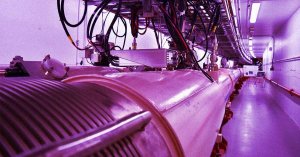
The U.S. Department of Energy has chosen Brookhaven National Laboratory in New York as the site for a new Electron-Ion Collider, a $1.6–$2.6 billion project expected to be operational by 2030. The facility aims to advance nuclear physics research and maintain American leadership in accelerator technology.
Researchers from Duke University, Ohio State University, and Oak Ridge National Laboratory have demonstrated a quantum key distribution system that encrypts data at megabit-per-second rates, five to ten times faster than current methods. By encoding two bits per photon and using high-speed detectors, the system could support encrypted calls and video streaming, bringing quantum-secured communication closer to practical use.
Japanese astronomers report a possible intermediate-mass black hole, 100,000 times the Sun's mass, hidden in a gas cloud near the galactic center. If confirmed, it would be the first of its kind in the Milky Way and a key link in black hole evolution.
A surge of AI-generated job applications is overwhelming recruiters, with one tech publication receiving over 400 submissions in 12 hours, many showing clear signs of inauthenticity. This trend is exacerbating the already stalled U.S. job market, leaving genuine candidates overlooked. The incident highlights the growing need for better screening methods.
Researchers from MIT and Carnegie Mellon used data from the Moral Machine website to train an AI to predict human ethical choices in driving dilemmas. The study suggests that aggregating public opinion could offer a democratic path to programming morality into machines, though experts caution that crowdsourced ethics may inherit human biases.
Microsoft researchers have achieved a milestone in machine translation, with an AI system that translates Chinese news articles into English at a level comparable to professional human translators. The breakthrough, which involved a sample of 2,000 sentences, marks a significant step forward in the field of natural language processing.
A viral AI-generated thread by Cam Harless reimagines all US presidents with mullets and mustaches, sparking amusement and debate. The images, created with Midjourney, blend historical figures with modern coolness, drawing both laughs and critiques. The thread highlights the creative potential and ethical questions surrounding AI image generators.
Saber Interactive CEO Matthew Karch publicly disparaged a former lead writer who alleged the studio replaced her with ChatGPT, prompting a backlash from gamers and raising questions about AI disclosure on Steam.
Texas Governor Greg Abbott has ordered a temporary halt on new data center approvals to audit how these facilities connect to the state's strained power grid. The move comes as ERCOT faces a queue of over 1,800 projects demanding more than five times the grid's peak demand, raising concerns about reliability and transparency.
An Ontario audit found all 20 approved AI scribe platforms produced errors, including fabricated information, during testing. While officials say these issues occurred in the review phase, about 5,000 doctors already use the tools, raising concerns about patient safety.
Despite the prevalence of remote work, several AI startups are signing leases for expansive Manhattan offices, a move that some industry observers find puzzling. These companies, flush with venture capital, are using physical space to project legitimacy and motivate growth, even as their teams remain small.
At CES 2025, Dell executives admitted that consumers are not buying AI-powered computers, citing confusion over the technology's benefits. The company is shifting its messaging away from an AI-first approach and also reversing its decision to discontinue its XPS laptop line, which will return in 2026.
OpenAI's early dominance in generative AI is eroding as Google and other rivals gain ground, while the company faces unprecedented financial losses and slowing user growth. Analysts question whether OpenAI can monetize its products effectively and survive a potential industry downturn.