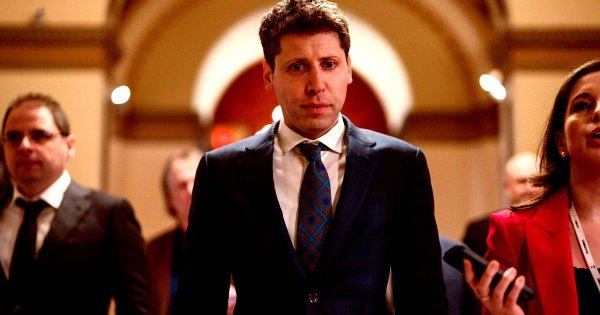
OpenAI, once the undisputed front-runner in generative artificial intelligence, is now fighting to maintain its edge as competitors close in and financial pressures intensify. The company, which launched the viral ChatGPT chatbot in late 2022, has seen its market lead shrink dramatically, prompting CEO Sam Altman to declare a “code red” internally, according to recent reports.
The stakes are enormous. OpenAI is burning through billions of dollars each quarter, with commitments to spend more than $1 trillion over the next several years. At the same time, revenue growth lags far behind, as most ChatGPT users decline to pay for subscriptions. This financial strain has led to staggering projected losses: Deutsche Bank analyst Jim Reid estimated in a Thursday note that OpenAI could lose $140 billion between 2024 and 2029. Reid called the situation “firmly in uncharted territory,” noting that no startup in history has operated with expected losses on such a scale.
Meanwhile, Google has made significant strides, narrowing the gap with OpenAI’s reported 800 million weekly active ChatGPT users as of September. Google’s Gemini AI app saw a 30 percent increase in monthly active users between July and November, according to Sensor Tower data reviewed by the Washington Post, while ChatGPT’s growth was just five percent over the same period. Recent data also suggests ChatGPT user growth is stalling in Europe, a troubling sign for the company.
Google’s latest Gemini 3 model, released last month, has outperformed OpenAI’s most powerful AI systems in benchmarks, and its Nano Banana Pro image model has pushed the envelope. In contrast, OpenAI’s Sora video-generating app has received little media attention after a controversial rollout. Beyond Google, OpenAI faces stiff competition from open-source AI models in China, such as DeepSeek’s energy-efficient R1 model, which disrupted Silicon Valley earlier this year.
Analysts Question OpenAI’s Survival Prospects
The mounting challenges have raised doubts among investors about OpenAI’s long-term viability. Porter and Co. equity analyst Ross Hendricks drew a cautionary comparison, telling the Washington Post, “We’re going to see a situation where ChatGPT was the early winner. They’re going to end up just like MySpace did with the inability to truly monetize and break away from the pack.”
Even Geoffrey Hinton, the so-called “Godfather of AI” and former Google AI lead, expressed skepticism about OpenAI’s future. In an interview with Business Insider this week, Hinton said, “I think it’s actually more surprising than it’s taken this long for Google to overtake OpenAI.” He added, “I think that right now they’re beginning to overtake it. Google has a lot of very good researchers and obviously a lot of data and a lot of data centers. My guess is Google will win.”
The financial burden is compounded by the need to cover interest on borrowed funds, which will require substantial revenue growth. Yet the recent slowdown in user growth suggests that monetization remains a formidable challenge. As the AI industry faces potential consolidation or a market correction, the question on many investors’ minds is whether OpenAI can adapt and thrive or if it will become a cautionary tale of early promise overshadowed by execution and economic realities.
Leave a Comment
Comments (0)