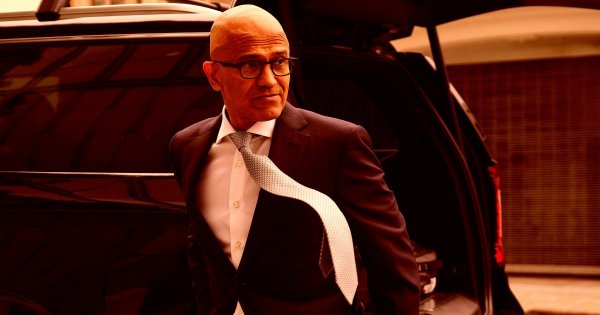
Microsoft CEO Satya Nadella has acknowledged that the rapid rise of artificial intelligence keeps him up at night, according to a report from The Verge. During an employee-only town hall last week, Nadella said he is "haunted" by the story of Digital Equipment Corporation (DEC), a computer company that dominated the early 1970s but was quickly rendered obsolete by IBM and others after making strategic missteps.
Nadella drew a direct line from DEC's collapse to Microsoft's current predicament, noting that some of the engineers who built Windows NT — the operating system that defined an era when it launched in 1993 — came from a DEC lab that had been shuttered. "Some of the people who contributed to Windows NT came from a DEC lab that was laid off," he said, as quoted by The Verge.
The CEO's comments come at a time of intense internal turmoil. Microsoft has been hit by multiple rounds of layoffs affecting thousands of employees, and morale is reportedly sinking. Workers describe a culture shift marked by constant fear of being let go — or replaced by AI, as the company increasingly embraces the technology.
Why Nadella Is Worried
Nadella's anxiety is not abstract. The company is pouring tens of billions into AI infrastructure, including a planned $80 billion for AI data centers this year — a figure that exceeds what rivals like Google and Meta have committed. At the same time, it is slashing headcount, a reordering of priorities that some say leaves the company exposed.
The pressure to stay relevant is amplified by outside forces. Last month, Elon Musk announced a new AI project called "Macrohard," a pointed joke aimed at Microsoft. Musk mused that because software companies like Microsoft don't manufacture physical hardware, "it should be possible to simulate them entirely with AI."
Nadella, for his part, seems willing to abandon legacy products if they become irrelevant. "All the categories that we may have even loved for 40 years may not matter," he told employees. "Us as a company, us as leaders, knowing that we are really only going to be valuable going forward if we build what's secular in terms of the expectation, instead of being in love with whatever we've built in the past."
Strained Ties With OpenAI
Adding to the complexity is Microsoft's relationship with OpenAI, its key AI partner. The two have repeatedly clashed as OpenAI seeks Microsoft's approval to transition to a for-profit structure and demands more computing capacity than Microsoft can currently provide. Last week, they signed a vaguely worded "non-binding memorandum of understanding," stating they are "actively working to finalize contractual terms in a definitive agreement."
The situation leaves Microsoft in an awkward spot: it must keep pace in the AI race while managing a delicate partnership and a workforce that is increasingly anxious about its future. Nadella's reference to DEC serves as a stark reminder that in the tech industry, today's giants can become tomorrow's footnotes.
Leave a Comment
Comments (0)