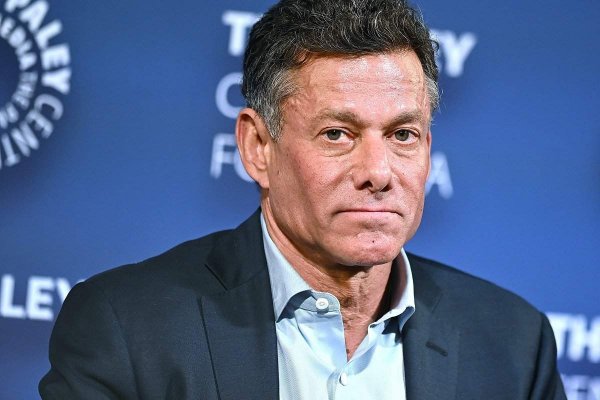
Strauss Zelnick, the chief executive of Take-Two Interactive, the company behind the Grand Theft Auto franchise, has publicly tempered the industry's enthusiasm for artificial intelligence, telling CNBC that the technology is unlikely to deliver the dramatic improvements many executives expect. His remarks, made in a recent interview, challenge a prevailing narrative that AI will revolutionize game production.
Zelnick pointed out that interactive entertainment has relied on AI for decades, but he dismissed the term itself as misleading. “AI stands for 'artificial intelligence,' which is an oxymoron, there is no such thing,” he said, underscoring his skepticism about the current wave of AI hype.
The gaming sector is currently navigating a turbulent period, marked by significant job losses and fears that generative AI tools could replace human roles, particularly in areas like voice acting and asset creation. While AI has long been used for practical purposes such as controlling non-playable characters, the emergence of generative models from companies like OpenAI and Recraft has introduced new capabilities—and new anxieties—about the future of creative work.
Zelnick, however, does not see AI as a silver bullet. “I would love to say that [AI is] going to make things cheaper, quicker, better, or easier to make hits,” he told CNBC. “I don't think that's the case.” Instead, he suggested that AI might free up creative teams from mundane tasks, allowing them to focus on more complex and imaginative work. “The machines can't make the creative decisions for you,” he added.
His stance stands in contrast to the enthusiasm seen in many corporate boardrooms, where AI is often touted as a transformative force. Given Take-Two's influence in the industry, Zelnick's caution could resonate with other publishers and developers weighing how aggressively to adopt the technology.
The debate over AI's role in gaming is not merely academic. Recent incidents, such as a radio station's failed experiment with AI hosts, highlight the potential pitfalls of relying too heavily on automation. In the gaming world, the stakes are similarly high, with workers and unions raising concerns about job security and the quality of AI-generated content.
While Zelnick's comments are measured, they arrive at a time when many companies are making bold bets on AI. His skepticism may prompt a more critical evaluation of the technology's actual benefits, particularly in an industry already grappling with economic pressures and workforce instability.
For now, Take-Two appears committed to a more pragmatic approach, acknowledging AI's utility while rejecting the notion that it can replace human creativity. As Zelnick put it, the technology may assist, but it cannot make the artistic choices that define a successful game.
Leave a Comment
Comments (0)