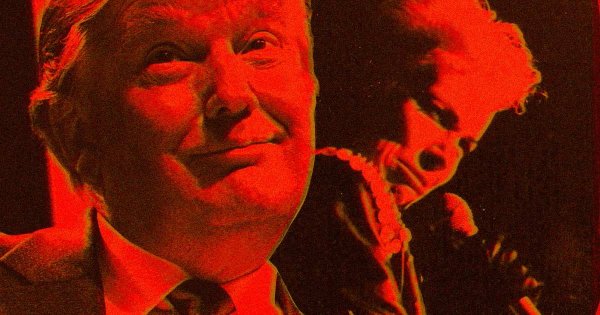
A new YouTube video shows a synthetic version of former President Donald Trump performing the Eurythmics' 1983 hit 'Sweet Dreams,' the latest in a series of AI-generated karaoke clips that have drawn both amusement and unease online.
The upload comes from the channel 'Coding Elite,' the same creator who previously used a neural network to make Trump appear to rap Eminem's 'Lose Yourself.' That earlier video, which circulated widely, prompted mixed reactions, including one Facebook user who commented, 'I want my two minutes back.'
For this latest clip, the creator applied an AI algorithm developed by Google engineers to synthesize Trump's voice, making it sound as though he is singing the song's melody and lyrics. Unlike the audio-only Eminem cover, the new video includes synchronized footage of Trump, with the visuals automatically altered to match the singing motions.
The technique relies on voice conversion and lip-sync technologies that have become increasingly accessible in recent years. While such tools are often used for entertainment, they have also raised concerns about misinformation and the ethical implications of realistic manipulated media.
How the AI Mimics a Voice
Google's neural network, originally designed for text-to-speech and voice conversion tasks, can learn the unique characteristics of a person's voice from a limited set of samples. By feeding it recordings of Trump's speeches, the system can generate new audio that closely resembles his tone and cadence, even when singing.
In the 'Sweet Dreams' video, the creator also used a video generation model to alter Trump's facial movements, creating the illusion that he is mouthing the words. This combination of audio and visual manipulation marks a step beyond simple voice cloning, offering a more convincing—and potentially more deceptive—result.
The video has sparked commentary on social media, with some viewers finding it humorous and others expressing concern about the ease with which realistic fake videos can be produced. The previous Eminem cover had already demonstrated the viral potential of such content, and the new upload appears to be following a similar trajectory.
Context of AI-Generated Content
This is not the first time AI has been used to create realistic videos of public figures. From politicians to celebrities, synthesized media has become a growing phenomenon, prompting platforms like YouTube to update policies around manipulated content. However, enforcement remains inconsistent, and many videos continue to circulate without clear labeling.
For 'Coding Elite,' the motivation seems to be entertainment rather than deception. The channel's description and the video's presentation do not claim to be real, and the absurdity of the premise—Trump singing a synth-pop classic—makes the manipulation apparent to most viewers.
Still, the underlying technology is advancing rapidly. What once required significant expertise and computing power can now be done with open-source tools and consumer hardware, raising questions about the future of digital trust.
As the video gains traction, it serves as a reminder of both the creative possibilities and the potential pitfalls of AI-generated media. Whether viewers laugh or wince, the line between reality and fabrication continues to blur.
Leave a Comment
Comments (0)