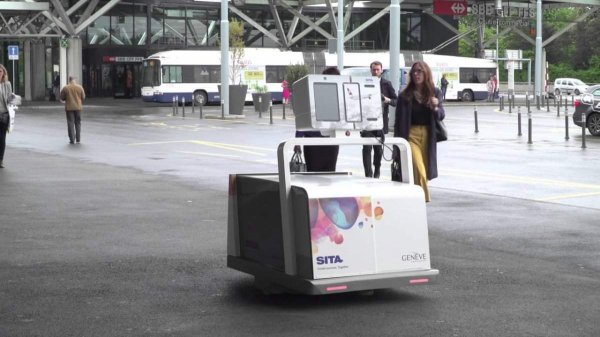
Passengers flying out of Geneva Airport (GVA) may soon find a new helper at the curb: a robot named Leo that takes over the entire checked-baggage process. Currently in a testing phase, the autonomous machine approaches travelers outside the terminal, accepts their luggage, prints a tag, and transports the bags directly to security screeners, bypassing traditional check-in counters.
Leo is the brainchild of SITA, a Swiss technology company specializing in air transport communications and IT solutions. The robot can carry two suitcases at a time, each weighing up to 32 kilograms, and is equipped with obstacle-avoidance technology to navigate around people and other barriers. SITA envisions Leo as a step toward broader robotics adoption in airports, though no timeline or expansion plans beyond Geneva have been announced.
The trial comes amid growing passenger frustration with airport bottlenecks, from long security lines to the time-consuming ritual of dropping off bags. For many travelers, checking a bag involves waiting in queue, wrestling with weight limits, and often paying extra fees—a process that Leo aims to simplify.
While the concept is promising, industry observers note that robotics in airports face significant hurdles, including reliability, safety, and integration with existing security protocols. SITA has not disclosed specific performance data from the Geneva trial, nor have they commented on potential challenges encountered during testing.
How Leo Works
According to SITA, the robot is designed to meet passengers at the terminal entrance. Travelers enter their flight details, place their suitcase inside Leo, and the robot prints a luggage tag. It then carries the bag to the security screening area, where it is processed for the flight. The entire interaction is intended to reduce the need for passengers to wait in line at check-in counters.
Geneva Airport, one of Switzerland's busiest, serves as a testbed for the technology. The airport has not yet indicated whether Leo will become a permanent fixture or if the trial will be extended to other terminals.
Potential Impact on Air Travel
If successful, Leo could represent a shift in how airports handle baggage, particularly for passengers who prefer self-service options. The robot's ability to handle up to 32 kilograms per suitcase aligns with most airlines' checked-baggage limits, making it a practical option for many travelers.
However, the technology is still in its infancy, and SITA will need to address any operational kinks before Leo can be deployed on a wider scale. The company has not released a timeline for commercial rollout, and no other airports have announced plans to adopt similar systems.
For now, Leo remains a test case in Geneva—a glimpse of what might become a common sight in airports, but with no guarantee of near-term expansion.
Leave a Comment
Comments (0)