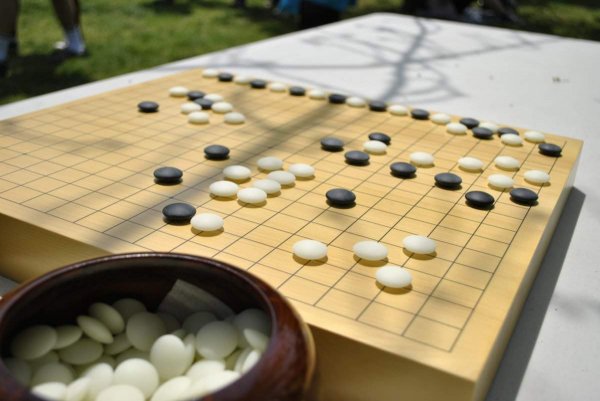
Google DeepMind's artificial intelligence program, AlphaGo, is set to challenge Lee Sedol, the world's highest-ranked Go player, in a five-game match in Seoul, South Korea, beginning March 9. The winner will take home a $1 million prize, according to Demis Hassabis, CEO of DeepMind, who announced the event.
The match, scheduled for March 9-13 and 15, marks a significant moment in AI development, as Go is considered one of the most complex board games, requiring intuition and strategic depth. AlphaGo has already demonstrated its proficiency by defeating French champion Fan Hui 5-0 in a previous match.
AlphaGo's approach relies on deep learning, a branch of AI where neural networks are trained on large datasets, such as historical Go games, to make predictions about the best moves. The system then improves through self-play, using trial and error to refine its strategies. This method allows AlphaGo to evaluate positions and choose moves that mimic or surpass human expertise.
Despite AlphaGo's track record, Lee Sedol remains confident. In a statement, he said, "I have heard that Google DeepMind's AI is surprisingly strong and getting stronger, but I am confident that I can win at least this time." His assertion underscores the uncertainty of the outcome, even for an AI that has mastered the game.
Stakes for Google and AI
The match carries high stakes for Google, as a loss would be broadcast live to a global audience, potentially damaging the company's reputation in the competitive AI landscape. Conversely, a victory would be a major milestone, comparable to IBM's Deep Blue defeating Garry Kasparov in chess, as Hassabis noted in a press briefing. "If we win the match in March, then that's sort of the equivalent of beating Kasparov in chess," he said. "Lee Sedol is the greatest player of the past decade. I think that would mean AlphaGo would be better than any human at playing Go. Go is the ultimate game in AI research."
Such a win could position Google to compete more effectively with other tech giants like Facebook, Microsoft, and Magic Leap, which are also investing heavily in AI. However, the immediate focus is on the match itself, which will be closely watched by the AI research community and the public.
Beyond the game, Hassabis emphasized the broader potential of the technology. "Ultimately we want to apply these techniques in important real-world problems," he said, citing examples like climate modeling and medical diagnostics. The Go match serves as a proving ground for these applications, demonstrating how AI can handle complex decision-making tasks.
The event in Seoul will provide a real-time test of AlphaGo's capabilities against the best human player, offering insights into the current state of AI and its future trajectory.
Leave a Comment
Comments (0)