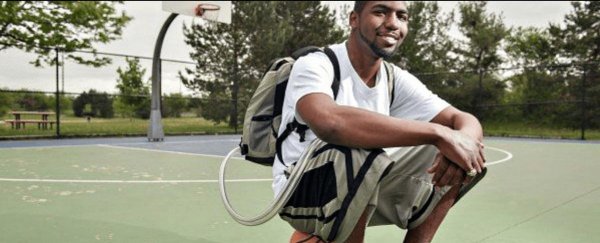
For more than a year, a 25-year-old Michigan man carried his own heartbeat in a backpack. Stan Larkin, who received a full heart transplant on May 9, 2016, had lived 555 days with a portable artificial heart device called Syncardia, which pumped blood through his body while he waited for a donor organ.
Larkin's case, disclosed by the University of Michigan Frankel Cardiovascular Centre, marks the first time a patient in the state was discharged home while reliant on the Syncardia system. The device, a 6-kilogram (13.5-pound) backpack connected to the patient's vascular system, maintains blood circulation when both sides of the heart fail.
Larkin and his brother, Dominique, both were diagnosed as teenagers with familial cardiomyopathy, a genetic condition that can trigger heart failure without warning. The condition is known as a leading cause of sudden death in athletes. By the time they reached the University of Michigan's intensive care unit, both brothers were critically ill, according to Jonathan Haft, the surgeon who led their care.
“They were both very, very ill when we first met them in our intensive care units,” Haft said. “We wanted to get them heart transplants, but we didn’t think we had enough time. There’s just something about their unique anatomic situation where other technology wasn’t going to work.”
Dominique used the Syncardia for only a few weeks before receiving a transplant. Stan, however, faced a longer wait. Rather than remain hospitalized, he was fitted with the Freedom portable driver, which allowed him to go home and resume some daily activities.
Doctors were initially uncertain about how much physical activity Larkin could manage with the device. He reported being unable to hold his daughters or give them piggyback rides. But he did continue playing basketball, a development that surprised his medical team.
“This wasn’t made for pick-up basketball,” Haft said. “Stan pushed the envelope with this technology … He really thrived on the device.”
Larkin's experience illustrates a potential bridge for patients with total heart failure who are awaiting donor organs. While implantable defibrillators can assist with partial heart failure, Syncardia is designed for cases where both ventricles fail.
Now fully recovered, Larkin has shared his story, which he describes as an “emotional rollercoaster,” to raise awareness about the 5.7 million Americans living with heart failure and the ongoing need for organ donors.
“You’re heroes to all of us,” David J. Pinsky, director of the Frankel Cardiovascular Centre, told the brothers. “The fact that you take your story public and allow us to teach others makes a difference. You’ll make a difference for a lot of patients. You’ll make a difference to the doctors of the future.”
Leave a Comment
Comments (0)