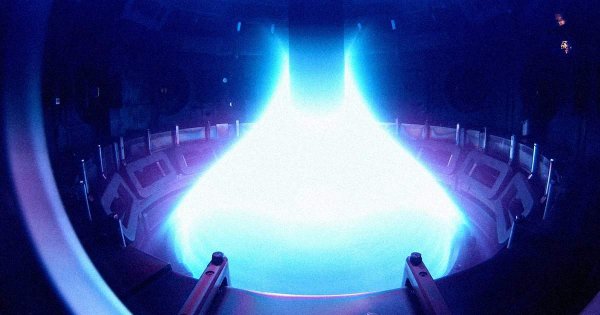
Scientists at the U.S. Department of Energy’s Princeton Plasma Physics Laboratory (PPPL) have completed a key upgrade to their experimental fusion reactor, using a common battery metal to address one of the field’s most persistent challenges: keeping plasma hot and dense enough to sustain a fusion reaction.
The approach, part of the Lithium Tokamak Experiment, involves coating the reactor’s inner walls with lithium. The silvery metal, widely used in rechargeable batteries, absorbs stray plasma particles that would otherwise bounce back into the reaction and cool it down. By preventing that cooling effect, the lithium coating helps maintain the extreme temperatures and pressures required for fusion—the same process that powers the sun.
According to a press release from PPPL, the laboratory’s Plasma Science and Technology unit head, Phil Efthimion, said the machine is now ready to exploit the full capability of the upgrade. Upcoming experiments will test whether the reactor can sustain even hotter plasmas while using stronger magnetic fields to confine them.
The work comes at a time of renewed interest in fusion energy, with both public laboratories and private companies pursuing the goal of practical fusion power. While the technology holds the promise of nearly limitless, clean energy, it has long been hampered by the difficulty of achieving and maintaining the conditions for a net-positive reaction.
The lithium coating technique is one of several approaches being explored to improve plasma confinement. If successful, it could bring the world a step closer to making fusion a viable energy source.
For now, the focus at PPPL is on the next round of experiments, which will determine whether the lithium upgrade delivers the expected gains in plasma performance.
Leave a Comment
Comments (0)