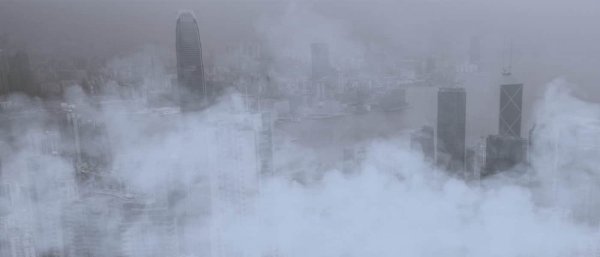
The first day of 2017 brought a thick, toxic haze over much of northern China, grounding hundreds of flights and forcing the closure of major highways as air quality plummeted to hazardous levels. In Beijing and Tianjin, airports saw mass cancellations, while roads were deemed unsafe for driving, according to reports from the region.
Measurements of fine particulate matter, known as PM2.5, surged past 500 micrograms per cubic meter in some areas—more than 50 times the safety threshold recommended by the World Health Organization. These microscopic particles can penetrate deep into the lungs and are linked to asthma and chronic respiratory disease.
In response, authorities in 24 cities, mostly in the northern part of the country, issued red alerts—the highest of four warning levels. Beijing and Tianjin remained under orange alerts, the second-highest tier, as the smog persisted.
The aerial footage captured by CNN's Jim Sciutto showed the scale of the event, with a time-lapse video revealing how the haze engulfed Beijing in just 20 minutes. The images served as a stark reminder of the environmental toll of rapid industrialization.
What's Driving the Pollution
China's Minister of Environmental Protection, Chen Jining, told the South China Morning Post that winter heating, industrial emissions, and automobile exhaust were the primary sources of the smog. He also pointed to unusual weather patterns, including a very strong El Niño that affected the Pacific from 2015 to 2016, which created stagnant air conditions that trapped pollutants.
Despite China's pledges to reduce emissions and its substantial investments in renewable energy, the country still relies heavily on coal. As winter temperatures dropped and electricity demand rose, coal burning increased, exacerbating the situation.
The episode is considered one of the worst air pollution events China has experienced, affecting an estimated 460 million people. The environmental ministry has outlined steps to mitigate winter smog, including temporarily shutting down or reducing production at high-emission cement and steel factories, and restricting coal use, particularly in rural households.
While these measures are aimed at curbing future episodes, the immediate impact of the New Year smog highlighted the ongoing challenge of balancing economic growth with public health and environmental sustainability.
Leave a Comment
Comments (0)