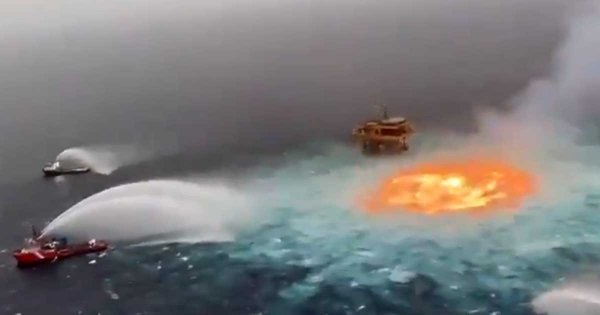
MEXICO CITY — A Pemex-operated oil and gas platform in the Gulf of Mexico, already known for a dramatic fire in 2021, has been leaking methane at a rate that climate experts say is significant. The leak, which occurred in August, released an estimated 44,064 tons of methane into the atmosphere over a 24-day period, according to a Reuters report.
That volume of methane is equivalent to about 3.7 million tons of carbon dioxide, or the annual electricity consumption of roughly 719,926 U.S. homes, based on Environmental Protection Agency (EPA) conversion factors. The figures highlight the outsized role of methane, a greenhouse gas that, while shorter-lived in the atmosphere than carbon dioxide, is far more potent in the short term.
The platform, part of the Ku-Maloob-Zaap development, was the site of an undersea gas leak and subsequent fire in July 2021. Pemex, Mexico's state-owned oil company, attributed that incident to a lightning strike, which ignited the gas and caused the ocean surface to burn for at least six hours. The current methane leak, however, was not accompanied by visible flames, making it a quieter but potentially more insidious threat.
Methane is estimated to be about 80 times more effective at trapping heat than carbon dioxide over a 20-year period, according to the Intergovernmental Panel on Climate Change (IPCC). This means that even relatively small leaks can have a disproportionately large impact on global warming.
Why Methane Leaks Matter
The Ku-Maloob-Zaap leak is part of a broader pattern of methane emissions from fossil fuel operations worldwide. While carbon dioxide remains the primary driver of climate change, methane is considered a low-hanging fruit for emissions reductions because targeted fixes, such as repairing leaks and improving monitoring, can yield rapid benefits.
Environmental groups have repeatedly called on oil and gas companies to step up leak detection and repair efforts. The Pemex incident, coming just over a year after the fire, raises questions about the company's maintenance and safety protocols.
Pemex has not yet issued a public statement regarding the August leak. The company, which has faced financial and operational challenges in recent years, has been under scrutiny for its environmental record.
The Gulf of Mexico is a major hub for oil and gas production, with numerous platforms operated by national and international companies. While leaks are not uncommon, the scale of this particular release has drawn attention due to its size and the platform's history.
As the world grapples with the need to reduce greenhouse gas emissions, incidents like this highlight the ongoing tension between fossil fuel extraction and climate goals. The economic value of oil and gas production often conflicts with the environmental costs, a balance that regulators and companies continue to struggle with.
The full extent of the environmental impact from the August leak is still being assessed. However, the data released so far suggests that the event is a significant contributor to the region's overall methane emissions.
For now, the Ku-Maloob-Zaap platform remains operational, and the company has not indicated plans to shut it down. The leak, while not an immediate threat to human health, serves as a reminder of the hidden costs of energy production.
Leave a Comment
Comments (0)