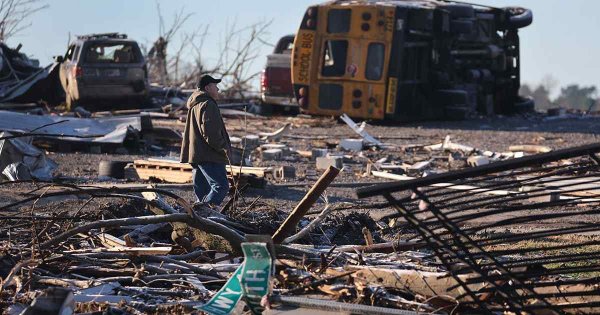
A ferocious storm system tore through the Midwest on Wednesday, unleashing nearly 20 tornadoes and hurricane-force wind gusts that shattered records and left a trail of destruction. The National Weather Service logged 55 reports of winds exceeding 75 mph across the region — the most ever recorded in the U.S. in a single day. The storms struck Iowa, Minnesota, and Nebraska, toppling trucks, destroying homes, and cutting power to more than 500,000 customers.
The outbreak included a tornado in southeastern Minnesota that marked the first December tornado on record for that state. The unusual winter activity follows a deadly series of tornadoes that swept through Kentucky and Southern Illinois just days earlier, killing close to 100 people and causing the collapse of an Amazon warehouse.
Meteorologists note that tornadoes are rare in December because the warm, humid air that fuels them is typically absent. But the frequency and intensity of such events are shifting as global temperatures rise. FEMA Administrator Deanne Criswell told CNN, “This is going to be our new normal. The effects we are seeing of climate change are the crisis of our generation.”
Why Winter Tornadoes Are on the Rise
While scientists are cautious about attributing any single storm to climate change, the broader trend is clear: warmer winters can create conditions that allow severe thunderstorms to develop outside the traditional spring and summer seasons. The December outbreak fits a pattern observed in recent years, where extreme weather events occur with greater frequency and in unexpected places.
The storm system’s intensity was staggering. Wind speeds reached hurricane force, with gusts above 75 mph reported across a wide area. The sheer number of high-wind reports in one day is unprecedented in U.S. records, according to the National Weather Service.
The human toll is still being assessed, but the damage to infrastructure and homes is extensive. Power restoration efforts are underway, but utility crews face challenging conditions, including downed lines and blocked roads.
Federal Response and Climate Warning
Criswell’s remarks underscore a growing concern among federal officials that climate change is not a distant threat but a present-day crisis. Her comments align with scientific assessments that link a warming atmosphere to more intense storms, heavier rainfall, and shifting weather patterns.
The Midwest outbreak and the earlier Kentucky tornadoes highlight the need for communities to prepare for extreme weather events that are no longer confined to traditional seasons. Emergency management agencies are urging residents to review their preparedness plans and heed warnings from local authorities.
As the region begins to recover, the storms serve as a stark reminder of the increasing volatility of our climate. With each passing season, the evidence mounts that the “new normal” is one of more frequent and more powerful weather events.
Leave a Comment
Comments (0)