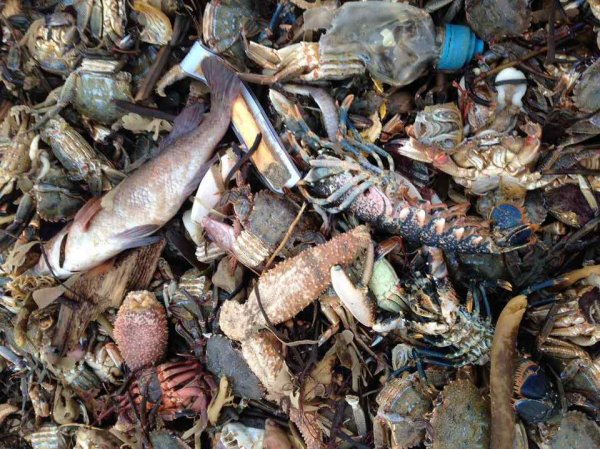
An unprecedented number of dead and dying marine animals, including lobsters, starfish, and birds, have been washing ashore along the United Kingdom's east coast, prompting a wave of concern among conservationists and scientists. The scale of the event has made it difficult for experts to fully quantify the toll, with one marine conservationist describing areas where the animals are piled ankle-deep or even calf-deep.
Bex Lynam, of the marine conservation charity Yorkshire Wildlife Trust, told BuzzFeed News that the sheer volume of animals is overwhelming. "It's really hard to quantify the numbers, to be honest," she said. Rodney Forster, a marine biologist at the University of Hull, reported that at least 24 different species have been identified so far along the coast.
The exact cause of the mass stranding has not been confirmed, but many experts are looking to the recent "Beast from the East" storm, which brought extreme cold and snow to the region. During the storm, ocean temperatures dropped from 5 degrees Celsius (41 degrees Fahrenheit) to a frigid 2 degrees Celsius (about 35 degrees Fahrenheit) in under a week—a dramatic swing for the area. This rapid cooling was accompanied by strong wind gusts that churned up large waves, disturbing the seabed and potentially smothering animals with sediments. The storm also coincided with spring low tides, which may have left marine life exposed to the cold air and stranded on shore.
The combination of sudden temperature drops, high winds, and low tides appears to have created a lethal set of circumstances. Low temperatures can make marine life lethargic, and once stranded, the lack of water and extreme cold pose additional threats. While the stranding has mostly involved invertebrates like starfish and crustaceans, Forster noted that larger animals such as seals, dolphins, and whales could be affected if their food sources are disrupted or killed.
Climate Change and Future Storms
The "Beast from the East" is not expected to be the last storm of the late winter/early spring season. The storm's intense cold was linked to a "polar vortex" event over Europe, which, while a normal climate feature, has been unusually severe and prolonged. Some scientists have connected this unusual cold with the freakish warmth currently seen in the Arctic, a sign of a warming planet. Although the connections are still poorly understood and contentious, scientists believe that climate change will make intense storms more commonplace and more extreme. This suggests that similar marine die-offs could occur in the future.
Despite the grim scene, the long-term impact on the coastline may be limited. Since many of the species washed up are invertebrates, they are often abundant and resilient. The Conversation noted that starfish, one of the most affected groups, are widespread throughout the Atlantic and highly resilient. However, teams of volunteers have been scanning the coast for survivors, filling truck beds with lobsters to return to the sea once the weather improves. Lynam told The Guardian that given the importance of fishing and shellfishing in the area, "It's worth saving them so that they can be put back into the sea and continue to breed."
Lissa Batey, senior living seas officer of the Wildlife Trusts, emphasized that while natural disasters like this cannot be prevented, humans can mitigate against declining marine life and the problems they cause. She suggested creating marine protected areas that are large enough and close enough to offer fish, crustaceans, dolphins, and other marine life the protection they require to withstand natural events. This event, while perhaps not having lasting effects, serves as a reminder of how extreme weather events, exacerbated by climate change, could continue to threaten marine species already facing numerous human impacts, from plastic pollution to ocean dead zones.
Leave a Comment
Comments (0)