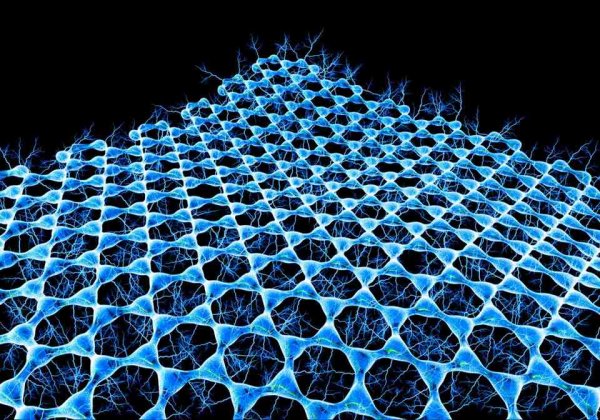
For the first time, researchers have coaxed superconductivity out of graphene without chemically altering the material, a breakthrough that could bring practical room-temperature superconductors closer to reality. The work, conducted by a team at the Massachusetts Institute of Technology (MIT), involved stacking two graphene layers and twisting them to a precise angle of 1.1 degrees—the so-called 'magic angle'—then applying a small electric field to achieve zero electrical resistance.
The discovery, detailed in two papers published in the journal Nature, emerged almost by accident. The team, led by physicist Pablo Jarillo-Herrero, was investigating how the 1.1-degree offset between atomic layers of the two-dimensional material would affect electron behavior. Theories had long predicted unusual effects, but the actual outcome exceeded expectations.
After applying the electric field, the bilayer system became a superconductor, and the effect was reproduced across multiple devices and measured with collaborators. 'We have produced all of this in different devices and measured it with collaborators. This is something in which we're very confident,' Jarillo-Herrero told Nature.
Why This Superconductivity Differs
Previous attempts to induce superconductivity in graphene relied on doping—introducing foreign atoms such as calcium to alter the material's electronic properties. This new approach leaves the graphene pristine, relying solely on the twist angle and electric field. That distinction matters because it suggests that the superconductivity arises from intrinsic electronic interactions, potentially unlocking a rare and powerful form known as the p-wave state. While not yet confirmed, the possibility has intrigued physicists.
The achievement also revives hopes for superconductors that operate at room temperature. Most known superconductors require cooling to near absolute zero, with the warmest operating around −140 degrees Celsius. The cost and complexity of such cooling have limited their practical use. A room-temperature superconductor could revolutionize fields from medical imaging to power grids and consumer electronics.
Graphene, a single layer of carbon atoms arranged in a hexagonal lattice, has long been celebrated for its remarkable electrical and mechanical properties. Its production on a large scale has become more feasible, making the prospect of graphene-based superconductors more attainable than earlier exotic materials.
While these studies are only the first to explore superconductivity in pure graphene, the implications are substantial. If the p-wave state is confirmed, it could lead to new types of quantum computing and other advanced technologies. For now, the MIT team's results offer a promising path toward superconductors that could operate under everyday conditions.
Leave a Comment
Comments (0)