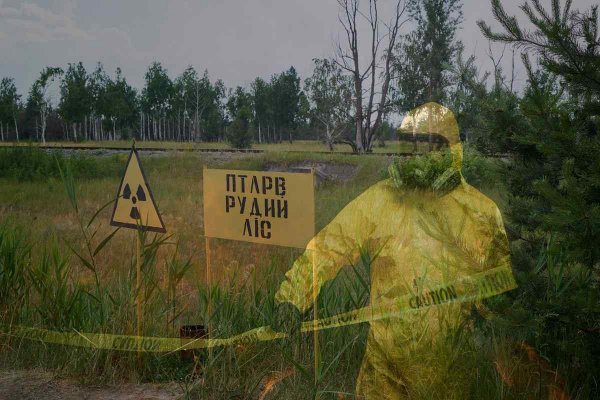
Ukrainian authorities have reported that Russian military personnel stationed at the Chernobyl nuclear site have shown signs of acute radiation sickness, leading to a hurried withdrawal from the area. The claim, made by Ukraine's state-owned utility Energoatom, adds a new dimension to the ongoing conflict, highlighting the risks posed by the region's contaminated zones.
According to Energoatom, Russian soldiers were exposed to "significant doses" of radiation, with symptoms appearing "very quickly," prompting panic among the troops. The utility's statement, relayed by The Guardian, does not specify the number of affected soldiers or the exact circumstances of exposure. However, it paints a picture of disarray among the occupying forces.
The situation at Chernobyl has been fraught since Russian forces seized the site in the early days of the invasion. Ukrainian officials have repeatedly accused the Russian military of mismanagement, including hindering firefighting efforts, causing a power outage, and allowing the looting of materials from a nearby facility that could be used in a dirty bomb. Additionally, a laboratory monitoring radiation levels was reportedly destroyed.
This week, Ukrainian officials said that Russian troops had entered a restricted area near the reactor, disregarding warnings about high radiation levels. The acting director of the Chernobyl plant was quoted as saying, "nobody goes there… for God's sake," emphasizing the danger. The soldiers, reportedly without protective gear, inhaled radioactive dust, leading to the reported poisoning.
IAEA Mission Planned Amid Skepticism
In response to these developments, the Director General of the International Atomic Energy Agency (IAEA) has pledged to lead a mission to the Chernobyl site to provide "assistance and support." The IAEA's involvement aims to assess the situation and ensure nuclear safety, though details of the mission's timing and scope have not been fully disclosed.
However, not all experts are convinced by the Ukrainian claims. Edwin Lyman, a nuclear expert at the Union of Concerned Scientists, told the Associated Press that it "seems unlikely" that a large number of Russian troops would have suffered radiation poisoning. Lyman's skepticism underscores the difficulty of verifying events in a war zone, where information is often fragmented and subject to propaganda.
The unfolding events at Chernobyl serve as a stark reminder of the dangers posed by aging nuclear infrastructure, especially when armed conflict intersects with such sites. The international community watches closely, as the potential for a nuclear accident looms large, with consequences that could transcend borders.
As the conflict continues, the safety of nuclear facilities in Ukraine remains a pressing concern. The IAEA's planned visit could provide much-needed clarity, but until then, the full extent of the radiation exposure and the circumstances surrounding it remain uncertain.
Leave a Comment
Comments (0)